



Esterel Technologies>About us>History
History
Esterel Technologies is born of INRIA

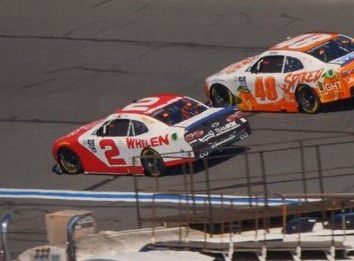
In 1984, Jean-Paul Marmorat and Jean-Paul Rigault, two researchers in Control Theory and Computer Science at the Ecole des Mines de Paris (Sophia Antipolis, France), were designing a robot car for a race organized by an early microcomputer journal. Classical languages did not let them express control algorithms in a natural and powerful way; so they invented an original informal notation to solve their problem. The language's superior ability to express control attracted the attention of a number of academics and research organizations. The original informal notation was soon made fully rigorous and became the origin of the Esterel language.
Esterel formal semantics and a first generation of formal verification tools were created under Gérard Berry's leadership - then, director of Research at Ecole des Mines and INRIA; now, Chief Scientist for Esterel Technologies. This first generation of Esterel tools was used in experiments by companies such as AT&T Bell Labs and Bertin for telephone applications, and Dassault Aviation for avionics.
In 1994, the Esterel V4 compiler and its associated verification tools were created. These relied on a very efficient internal representation of programs as systems of Boolean equations that could be efficiently analyzed using BDD (Binary Decision Diagram) technology and synthesized to hardware (FPGAs) or software.
In 1997, Charles André, researcher at the CNRS/I3S in Sophia-Antipolis, an institution devoted to research in Control and Computing, created a SyncCharts graphical notation to specify system behavior and control. At this time, Dassault Aviation, who also had participated in the initial work on Esterel with the Ecole des Mines de Paris, and Thales decided to use the technology for production development. A prototype version of Esterel Studio™ was then developed by Simulog, a French software company, and in September 1998, Dassault Aviation and Thomson CSF began to use the tool in their designs.
In November 1999, the company, Esterel Technologies, was created as a spin-off of Simulog with the mission to commercialize correct-by-construction design tools that have, as their core, a rigorous and unambiguous technology to handle specification and to automatically generate a defect-free implementation in software or HDL. The first generation of the commercial Esterel tool set was released in April 2000.
If you would like to learn more about the Esterel language, please read chapter 13 of the Stephen A. Edwards book, "Languages for Digital Embedded Systems".
SCADE History
SCADE™ has a colorful history of merging great technology into robust safety-critical products. Twenty years ago, Paul Caspi and Nicolas Halbwachs from Verimag, an academic research laboratory affiliated with the scientific University of Grenoble (UJF), the National Research Center (CNRS) and Grenoble Polytechnic Institute (INPG) created the formally-defined synchronous language, Lustre, for the development of critical control software. They won the well recognized Montpetit Prize of the "Académie des Sciences" for their work on Lustre.
In 1986, Merlin Gerin (now Schneider Electric), an industrial controls company, decided to use the Lustre concepts to design a tool called Saga to develop the monitoring and emergency stop system of a nuclear plants. This Saga project was a success, and, as a result, Merlin Gerin approached Verilog, a start-up software design company, to evaluate Saga as a commercial product.
During the same period Verilog met the engineers of Aérospatiale (now Airbus) and realized that they had independently developed a very similar tool called SAO, which was used to develop the fly-by-wire and flight control of the Airbus A320.
With these two technologies in hand, Verilog decided to create a commercial product integrating both SAO and Saga, in partnership with Merlin Gerin and Aérospatiale. This new product was named SCADE™.
SCADE was successfully deployed by Verilog until it was purchased by Telelogic in March 1999. SCADE was integrated into the growing Telelogic product line and continued its success in more safety-critical accounts, primarily aerospace firms with strict DO-178B requirements.
On November 1st, 2001, Esterel Technologies purchased the assets of the SCADE business unit from Telelogic. As part of the agreement, all SCADE employees joined Esterel Technologies' R&D and Marketing teams.
ESTEREL SCADE takes advantage of the power of expressiveness of synchronous languages to create unambiguous specifications that produce automated implementation. Today, ESTEREL SCADE Suite™ is the standard for the creation of DO-178B and ED-12B safety-critical embedded software in the avionics industry. A complementary product, ESTEREL SCADE Display, acquired in 2006 by Esterel Technologies from Thales Avionics enables Graphical Display Systems developers to design, verify and automatically generated graphical display systems applications, such as cockpit and dashboard display systems.
SCADE continues to evolve as the intelligent choice for development of high reliability and safety-critical systems. In February 2005, SCADE's KCG C code generation module received formal IEC 61508 product certification, applicable to all Safety Integration Levels, including SIL4. This certification enables automotive, transportation, medical and industrial controls designers to develop and deploy SCADE applications in an ever-increasing range of quality-critical systems.